Car Lockout Assistance in Seattle
Call (425) 200-7563Locked your keys inside your car? Amry’s Towing and Roadside takes car lockout requests in Seattle, Bellevue, and nearby communities. Tell us the model and location so suitability can be assessed.
Call (425) 200-7563 anytime to discuss authorized vehicle access, an estimate, and current availability. Mention whether the keys are in the cabin, locked in the trunk, missing, or damaged before assistance is arranged.
Child locked inside or someone in danger? Call 911 immediately if a child is locked inside, or a person or pet faces immediate danger. Give the exact location and follow the dispatcher’s instructions. Do not wait for routine lockout assistance.
Locked Your Keys in the Car? Call for Help
A door closing with the keys inside can interrupt a workday, shopping trip, or school pickup. Car unlocking assistance starts with understanding the vehicle, where the keys are, and whether there is safe working space beside the door.
We discuss the year, make, model, circumstances, and your authority to access the vehicle. A home driveway needs different planning from a tight garage or busy roadside. Give the actual vehicle location rather than only a nearby address.
Opening a vehicle and replacing a missing key are different requests. Tell us whether the keys are visible inside, a spare is available, or the key is lost or broken. That distinction helps us discuss the next step.
If the vehicle cannot be accessed appropriately, ask about emergency and local towing to a suitable locksmith, repairer, or dealer. Confirm the receiving location and vehicle requirements first. A routine lockout request does not automatically include key cutting, programming, or ignition repairs.
Common Vehicle Lockout Situations
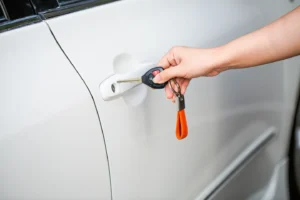
Keys are locked in the passenger compartment. Explain where you believe they are and whether any door is already open. Mention the vehicle’s model and any existing door, window, trim, or lock damage that could affect the assessment.
The keys are in the trunk or cargo area. Tell us whether the vehicle is a sedan, hatchback, SUV, or another body style. Access from the passenger compartment varies; unlocking a door does not guarantee that a separately secured trunk can be reached.
The remote or smart key is not responding. Share whether the key is with you, whether the car shows signs of electrical power, and whether an already configured manufacturer app is available. Vehicle-specific instructions matter when electronic access is unavailable.
The key is missing, broken, or inaccessible. Explain whether it was lost away from the car, damaged in a lock, or left somewhere you cannot reach. A replacement key, lock repair, or specialist assessment may be needed rather than ordinary entry assistance.
What to Do When You Are Locked Out
First, make sure no child or other vulnerable occupant is locked inside. Call 911 for a child trapped in the vehicle or any immediate danger. For an ordinary lockout, stay clear of passing traffic and choose a safe place to wait.
Check whether a spare key is reasonably available or an authorized remote-unlock feature is already set up for your vehicle. Do not force a door, insert improvised tools, or repeatedly pull a damaged handle while trying to solve the lockout.
Call with your vehicle details and location. If you are beside a road, explain the traffic exposure and which side can be approached. See WSDOT’s roadside response information for context, and follow emergency responders’ directions when they are present.
Vehicle Details & Authorized Access
Have photo identification and available ownership, rental, or permission documents ready. Vehicle access requires appropriate authorization. If your identification or registration is inside the locked car, tell us before dispatch so the available verification options can be discussed.
For a rental, company vehicle, or borrowed car, explain your relationship to the vehicle and any approval requirements. Your rental provider, employer, or owner may need to be involved. Do not assume a roadside request replaces their instructions or authority.
Before assistance is arranged: Confirm the model, key location, authorization, access, estimate, and availability. Mention anyone inside immediately. Tell us if another provider is coming or a spare becomes available.
How Our Car Lockout Assistance Works
Our five-step process keeps the lockout request clear. Vehicle details, permission, and working access are reviewed before entry options are considered. Conditions that differ on arrival may require a revised plan.
Request Assistance
Call (425) 200-7563 with the year, make, model, location, and lockout circumstances. Tell us where the keys are and whether anyone is inside. Share garage restrictions or roadside hazards early so they can be considered before a visit is arranged.
Vehicle & Authorization
We discuss the vehicle’s entry system, existing damage, and your authority to access it. Have identification and relevant vehicle documents available. If documents are locked inside, explain that during the call rather than assuming verification can be skipped.
Review Your Estimate
Review the estimated service charge, what the proposed visit covers, and available payment arrangements. Ask for the current arrival estimate. Missing keys, unusual security features, restricted access, or additional work can change the request and should be disclosed before dispatch.
Assess Entry Options
At the vehicle, the operator reviews authorization, the actual condition, and working access. Suitable entry options and any concerns are discussed before work. If safe, appropriate access is unavailable, another service may be needed rather than forcing the door or lock.
Access & Next Steps
When access is restored, retrieve the keys and confirm your next step before closing the vehicle. Tell the operator if the key cannot be found or the engine will not start. Any further service is assessed and quoted separately before additional work.
Keys, Security Features & Entry Planning
Different entry systems and conditions require different planning. Describe what you know without removing trim, forcing windows, or attempting to defeat a lock. A clear description helps us assess appropriate assistance.
Key Fobs, Modern Cars & EVs
Remote and smart keys: Tell us whether the fob is inside the vehicle or in your possession, and whether it has recently stopped responding. A remote-control issue is not necessarily the same as a mechanical lockout, and entry alone may not resolve it.
Manufacturer apps: An authorized remote-unlock feature may help when it is already configured and working for that vehicle. Availability depends on the model, power, connectivity, and account setup. Do not assume downloading an app during a lockout will enable access.
Modern cars and EVs: Share the exact model, unusual door handles, frameless windows, and any loss of electrical power. We assess suitability individually. Manufacturer instructions and the actual condition guide the plan; no single entry approach is appropriate for every vehicle.
Trunk Keys, Lost Keys & Damaged Locks
Keys in a locked trunk: Describe where the keys were placed and the body style. Separate trunk security, seat access, and electrical controls can affect the options. Do not assume opening the cabin automatically releases every compartment or makes the keys reachable.
Lost or damaged keys: A specialist automotive locksmith or dealer may be needed for replacement, programming, extraction, or repair. Confirm those services directly with the appropriate provider. Car lockout assistance should not be mistaken for a promise to create a working replacement key.
Existing damage or modifications: Mention sticking handles, broken locks, cracked glass, aftermarket security, and previous entry attempts. Point out concerns before work starts. Stop improvised attempts that may worsen the condition and make a straightforward assessment more difficult.
Child Vehicle Safety Guidance
After Entry: Keys, Starting & Next Steps
Before You Close the Door Again
Retrieve your keys and essential belongings once entry is restored. Keep the key with you while checking the next step, and make sure passengers are accounted for before locking up again. Tell the operator if a door or handle was already malfunctioning.
If the vehicle will not start after entry, describe whether the key is recognized and whether the battery appears weak. Ask about jump start assistance when appropriate. A lockout visit does not diagnose every starting fault or automatically include battery service.
If transport is needed, discuss flatbed or wheel-lift towing with dollies. Both can keep the vehicle’s own wheels off the road when correctly configured. Manufacturer instructions, access, and condition guide the choice; dollies can sometimes be more practical in restricted spaces.
Lockout Pricing & Arrival Estimates
The estimate depends on the vehicle, lockout circumstances, location, working access, equipment, and labor involved. Ask what the proposed charge covers and whether a separate visit or specialist service would be needed for lost keys, damaged locks, or programming.
Phone estimates use the information you provide. The final price can change if the actual vehicle, access, equipment, or labor differs. We explain necessary adjustments and obtain your approval before additional work. Accurate model details and a clear description help make the estimate more useful.
Arrival estimates depend on availability, distance, traffic, and access. Call for the current estimate instead of relying on a fixed response-time promise. Share garage closing times, gate restrictions, or other deadlines, and update us if your waiting location changes.
Not Sure Which Service You Need?
Tell us whether the keys are inside, lost, broken, or with you but not working. Describe electrical problems and any available spare or manufacturer-supported access option. These details help us discuss an appropriate next step.
Discuss Roadside OptionsSeattle Car Lockout Service Areas
Amry’s Towing and Roadside is based at 3612 Stone Way N, Seattle, WA 98103. We take car lockout requests across Seattle and nearby communities. Call to confirm your exact location, vehicle suitability, safe working access, and current availability before assistance is arranged.
Beacon Hill: Give the nearest intersection, driveway, or parking-space details. Mention sloped access and whether parked vehicles or traffic limit room beside the car so the operator can assess a suitable approach.
Capitol Hill: Share the apartment or garage entrance, parking level, and entry code. Tell us where you will wait if the building’s main entrance is different from the vehicle access or you need security to admit the operator.
Downtown Seattle: Provide the vehicle’s actual position rather than only a building’s mailing address. Garage clearance, loading restrictions, security procedures, and limited space beside doors can affect whether the operator can reach and assess the car.
Queen Anne: Describe the street position, driveway slope, and usable space beside the doors. A visible landmark can help identify the correct car when house numbers are difficult to see or the driveway entrance is elsewhere.
SoDo: For workplace lots, event parking, or industrial properties, share the gate and vehicle position. Mention restricted entrances, commercial traffic, and site contacts so access can be discussed before the operator arrives.
West Seattle: Give the exact address and enough detail to find the car in a driveway or large lot. Our West Seattle service page also explains local transport options if another service is required.
Bellevue: Call to confirm availability for your address and vehicle. Office garages, apartment parking, and private properties may require clearance details, an access code, or a contact who can admit the operator to the correct level.
Nearby Areas & Working Access
Check Lockout AvailabilityDetails to Share Before Assistance Is Arranged
Have the location, callback number, vehicle year, make, model, and color ready. Explain where the keys are and whether you are the owner or an authorized driver. A parking level, bay number, or nearby entrance helps identify the right vehicle.
Tell us about anyone inside the car, accessibility needs, or a situation that makes waiting difficult. Keep your phone available for directions and updates. If you need to wait in a nearby business or another safe place, explain how the operator can reach you.
A safely taken photo may help show the vehicle, garage entrance, tight parking position, or existing damage. Do not step into traffic or attempt to open a door with improvised tools to provide information. Discuss identification and verification requirements directly when arranging assistance.
Car Lockout Assistance FAQs
These answers cover common lockout questions. Your vehicle, key location, authorization, and working access determine the options. Confirm your request’s details rather than assuming every model or compartment can be accessed the same way.
Seattle Service Areas
Choose an area below for local access information or the published West Seattle page. Call to confirm your vehicle, exact address, and current availability, including requests elsewhere in King, Snohomish, or Pierce counties.